Famous Women in History: 15 Icons & Classroom Ideas (2026)
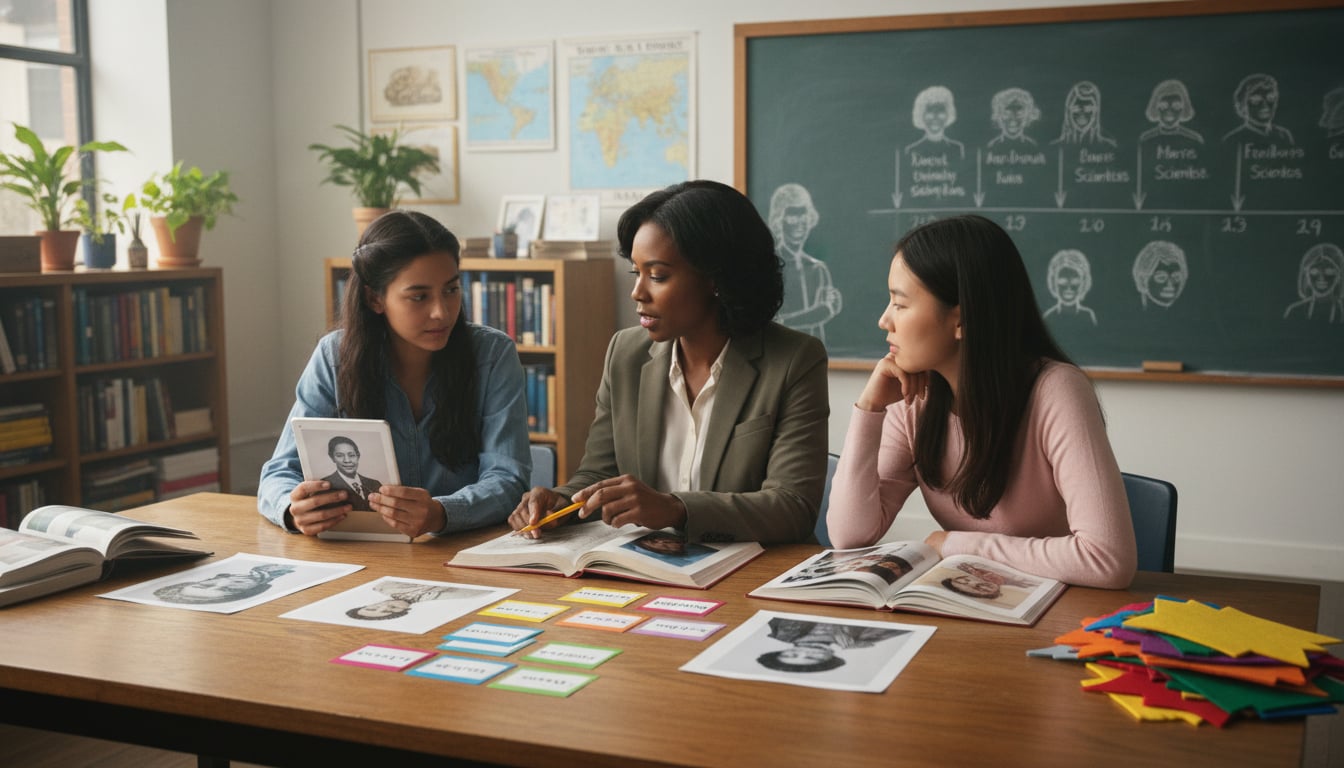
Learning about famous women in history provides a more complete and accurate understanding of our past. These influential figures include activists like Susan B. Anthony and Rosa Parks, scientists such as Marie Curie, and political leaders like Cleopatra and Queen Liliʻuokalani. For centuries, historical accounts have often overlooked the contributions of women, focusing primarily on the achievements of men. By actively seeking out and celebrating these stories, we correct the record and offer a richer, more truthful version of history. Recognizing the impact of these famous women in history inspires today’s generation to challenge outdated norms and pursue their own ambitions without limits. It’s a critical part of a well rounded education, showing every student that innovation, leadership, and courage are not defined by gender.
How We Chose the List (Criteria and Scope)
To create a focused and impactful list, we based our selections on several key criteria. We prioritized women whose work created a lasting, transformative impact on their field and society at large. The list includes individuals from diverse fields such as science, civil rights, politics, and the arts to present a broad view of influence. We also considered the global significance of their achievements. While this list of famous women in history is not exhaustive, it represents a curated selection of figures whose stories are essential for every student and lifelong learner to know.
Top 15 Famous Women in History
This curated list highlights fifteen influential women and the educational resources that bring their stories to life in the classroom. By grouping these diverse figures and tools together, we can see the recurring themes of leadership and resilience that span from ancient empires to modern civil rights movements. These materials are designed to provide students with both the historical context and the personal narratives necessary to appreciate the monumental contributions women have made throughout time.
1. iCivics Women’s History Month Resources
iCivics gathers standards‑aligned lessons, primary sources, and printables that make Women’s History Month concrete and classroom‑ready. Use it to anchor civic ideals in real biographies, like Clara Barton, so students see how individual action builds durable public institutions.
Why it matters: Clara Barton, the “Angel of the Battlefield,” founded the American Red Cross in 1881 and professionalized volunteer relief, proof that organized citizen compassion can meet nationwide needs.
Era/Region & Unit Fit: U.S. Civil War era; U.S. Reform Movements, Civics, Nonprofits, and Participation.
Skills you’ll build: Source analysis; academic vocabulary.
Quick classroom move: Use TeachTools Quiz Generator to build a comprehensive quiz based on iCivics’ lesson “How Are Clara Barton and the Red Cross Civic‑Minded?”
2. PBS Teaching Women’s Suffrage
PBS’s rich clips, timelines, and teacher guides help students connect faces, speeches, and street‑level activism to the constitutional story of the vote. Start with Susan B. Anthony to trace how argument, protest, and persistence culminated in the Nineteenth Amendment.
Why it matters: Anthony co‑founded the National Woman Suffrage Association and tested the limits of citizenship by illegally voting in 1872, an act that spotlights the path from protest to constitutional change.
Era/Region & Unit Fit: 1840s–1920s, United States, Reconstruction and Progressive Era units.
Skills you’ll build: Source analysis; argument tracing.
Quick classroom move: Use TeachTools Mini‑DBQ Generator with PBS clips and excerpts from Anthony’s 1873 speech to map how suffragists expanded the meaning of voting rights.
3. Rosa Parks Primary Source Analysis
Center the Montgomery Bus Boycott through the documents that ignited it, such as Rosa Parks’s arrest report, flyers, and local news. Students see how coordinated civil disobedience, legal strategy, and community organizing dismantled Jim Crow.
Why it matters: Parks’s 1955 refusal to give up her seat catalyzed a mass boycott and landmark legal victory, modeling how ordinary citizens leverage the law to confront systemic inequality.
Era/Region & Unit Fit: 1950s–1960s, United States, Modern U.S. Civil Rights and Civics.
Skills you’ll build: Primary source analysis; evidence‑based writing.
Quick classroom move: Use TeachTools Mini‑DBQ Generator to pair Parks’s 1955 arrest report with a boycott flyer, then add a CER prompt and a short vocab check.
4. Hidden Figures: Reading & Timeline
Bring STEM history to life with Katherine Johnson’s story, where precise math meets racial justice and gender equity. Position her calculations at the center of NASA’s success so students connect civil rights to scientific breakthroughs.
Why it matters: Johnson’s orbital mechanics work was pivotal to Project Mercury and Apollo, exemplifying perseverance amid segregation and bias.
Era/Region & Unit Fit: 1950s–1970s, United States, Civil Rights and STEM.
Skills you’ll build: Chronology construction; quantitative reasoning.
Quick classroom move: Use TeachTools Worksheet Generator to build a dated NASA milestones timeline that spotlights Johnson’s engineering contributions.
5. Bill of Rights Institute Women’s History Playlist: 1844-1860
Curated sources and clear framing let students encounter antebellum women in their own words. Start with Sojourner Truth to probe how rhetoric and law collided over slavery and suffrage.
Why it matters: Truth’s 1851 address links abolition and women’s rights, challenging students to analyze how appeals to liberty and equality confronted unjust laws.
Era/Region & Unit Fit: Antebellum United States, U.S. History: Abolition and Women’s Rights.
Skills you’ll build: Primary source analysis; sourcing.
Quick classroom move: Use TeachTools Worksheet Generator to compare multiple transcripts of Truth’s speech and analyze perspective and bias.
6. National Women’s History Alliance: Women’s History Quizzes
When time is tight, these printable, answer‑keyed quizzes give you fast, credible checks on women’s history across eras and fields. They work as bell ringers, exit tickets, or sub‑ready plans.
Why it matters: Ready assessments reinforce knowledge of trailblazers across STEM, arts, and politics while minimizing prep.
Era/Region & Unit Fit: Cross‑era, United States, U.S. History, STEM Pioneers, and Heritage units.
Skills you’ll build: Retrieval practice; reading comprehension; academic vocabulary.
Quick classroom move: Use TeachTools Quiz Generator to assemble a 10‑question exit ticket sampling NWHA topics to gauge mastery of key biographies.
7. American Experience: She Resisted
This PBS collection shows how women harnessed media, marches, and storytelling to push democracy forward. With figures like Ida B. Wells, students examine resistance as both message and method. For month‑long classroom integration, explore these Black History Month lesson plan ideas.
Why it matters: By spotlighting suffragists’ strategies, the collection reveals how visual culture and protest accelerated the 19th Amendment’s passage.
Era/Region & Unit Fit: 1910s, United States, Progressive Era and Suffrage.
Skills you’ll build: Media literacy; source analysis.
Quick classroom move: Use TeachTools Worksheet Generator to analyze 1913 images and decode the symbols that persuaded a skeptical public.
8. National Women’s History Alliance: This Month in Women’s History
Tie your calendar to content with date‑anchored spotlights that keep women’s history visible all year. Use a monthly moment, like Rosa Parks’s December 1955 stand, to launch quick writes and discussions.
Why it matters: Parks’s defiance and the ensuing Supreme Court ruling show how courage and organization drive systemic change.
Era/Region & Unit Fit: 1950s, United States, Civil Rights and Civics.
Skills you’ll build: Source analysis; cause‑and‑effect reasoning.
Quick classroom move: Use TeachTools Worksheet Generator to craft a mini‑DBQ on Parks’s arrest record and the boycott’s legal impact on public transit.
9. Empress Theodora Source Analysis
Push beyond the U.S. with a powerful Byzantine voice. Through law codes, chronicles, and mosaics, students encounter Theodora’s political savvy and her interventions on behalf of women.
Why it matters: Theodora’s leadership during the Nika Riots and her legal reforms on marriage, prostitution, and performers’ rights reveal how imperial influence reshaped social policy.
Era/Region & Unit Fit: 6th‑century Byzantine Empire, World History: Medieval Europe and Female Power.
Skills you’ll build: Primary source analysis; corroboration.
Quick classroom move: Use TeachTools DBQ Generator to compare Procopius with the San Vitale mosaics and evaluate how image and text construct Theodora’s authority.
10. Ballad of Mulan Source Analysis
Invite students into a foundational Chinese folk poem where filial duty meets battlefield courage. Side‑by‑side translations make gender norms, loyalty, and identity vivid and debatable.
Why it matters: The Northern Wei ballad presents a daughter taking her father’s place in war, challenging expectations while affirming core cultural values.
Era/Region & Unit Fit: 5th‑century China, Post‑Classical Asia; World History/World Literature.
Skills you’ll build: Primary source analysis; reading comprehension.
Quick classroom move: Use TeachTools DBQ Generator to compare two translations of key stanzas; have students annotate diction and cite evidence on perspective. For multilingual learners, the TeachTools Text Translator can generate quick bilingual glossaries of key terms.
11. Joan of Arc Reading & Obituary Project
Pair a concise biography with an authentic writing task so students wrestle with heroism, faith, and politics. Joan’s meteoric rise and tragic end open a window into medieval power dynamics.
Why it matters: The peasant teenager who led at Orléans helped secure the French crown; her trial and execution illuminate gender, authority, and sanctity.
Era/Region & Unit Fit: Late Middle Ages, France, World History.
Skills you’ll build: Perspective‑taking; citing evidence.
Quick classroom move: Use TeachTools Mini‑DBQ Generator to juxtapose trial excerpts with an obituary assignment that requires sourced claims.
12. Queen Liliʻuokalani: Last Queen of Hawaii
Teach American imperialism through Indigenous sovereignty and constitutional struggle. Liliʻuokalani’s measured, legal, and resolute voice anchors debates about annexation and power.
Why it matters: Hawaiʻi’s last monarch resisted a U.S.‑backed overthrow; her protests and petitions remain central to understanding empire and law.
Era/Region & Unit Fit: Late 1800s, Hawaiʻi, U.S. Imperialism.
Skills you’ll build: Primary source analysis; perspective‑taking.
Quick classroom move: Use TeachTools Quiz Generator to assess comprehension of the 1897 anti‑annexation petitions and the Queen’s formal protest letters.
13. Fifth Grade Women’s Suffrage Movement Fact File
A scaffolded organizer turns a big reform story into accessible notes and evidence. Use Susan B. Anthony’s arrest to show how one act can illuminate systemic inequality for younger learners.
Why it matters: Anthony co‑founded the National Woman Suffrage Association; her 1872 arrest sharpened the case for the 19th Amendment.
Era/Region & Unit Fit: 1840s–1906, United States, Progressive Era Reform and Civics.
Skills you’ll build: Reading comprehension; source analysis; vocabulary.
Quick classroom move: Use TeachTools Mini‑DBQ Generator to examine Anthony’s 1873 trial speech on citizenship and voting rights.
14. Sixth Grade Cleopatra Reading Passage Comprehension Activity
Guide students through a leveled reading on diplomacy, empire, and identity at the end of the Hellenistic age. Cleopatra’s choices become a lens on power and survival.
Why it matters: As Egypt’s last Ptolemaic ruler, Cleopatra navigated Roman alliances to protect autonomy and shaped the transition to imperial Rome.
Era/Region & Unit Fit: Hellenistic Egypt, 51–30 BCE, World History: Classical Civilizations and Empires.
Skills you’ll build: Reading comprehension; citing evidence; cause‑and‑effect.
Quick classroom move: Use TeachTools Worksheet Generator to create text‑dependent questions and a short response on how her alliances sealed Egypt’s fate.
15. Seventh Grade Susan B. Anthony Reading Passage Comprehension Activity
A targeted biography plus evidence‑based questions helps students connect a single life to a constitutional milestone. Track how Anthony’s organizing, arrest, and advocacy fed momentum for suffrage.
Why it matters: A leading suffrage reformer, Anthony co‑founded NWSA; her 1872 arrest exposed legal inequalities and helped pave the way to the 19th Amendment.
Era/Region & Unit Fit: 19th‑century United States, Progressive Era; Civics and Voting Rights.
Skills you’ll build: Reading comprehension; citing evidence. For extension ideas, see these reading comprehension activities.
Quick classroom move: Use TeachTools Quiz Generator to create an evidence‑based quiz and a constructed‑response prompt from Anthony’s 1873 trial excerpt.
Ways to Explore This List (For Educators, Parents, and Lifelong Learners)
Explore 23+ free AI tools for teachers
Browse All Tools →Bringing the stories of these famous women in history to life is a powerful way to engage students and learners of all ages. Instead of just reading about them, you can create dynamic educational materials that deepen understanding and retention.
-
For Educators: You can transform this list into a dynamic series of lessons. Why not create a custom worksheet about Marie Curie’s discovery of two Nobel Prize winning elements, polonium and radium? Or generate a quiz that covers key dates in the women’s suffrage movement? With the right tools, you can build an entire unit around famous women in history in just a few minutes. If you need help creating these resources quickly, check out the lesson planning tools at TeachTools.
-
For Parents: Discuss one woman from the list at dinner each night. Use a simple word search or crossword puzzle to make learning their names and key terms fun. It’s an easy way to introduce important historical figures and spark curiosity. You can start with free printable activities.
-
For Lifelong Learners: Challenge yourself to dig deeper. Pick one person from the list and find a biography or documentary about her life. Understanding her challenges and triumphs in greater detail provides valuable lessons in resilience and determination.
Key Dates and Context
Understanding the achievements of famous women in history is more meaningful with a sense of historical context. Progress was not a straight line, and many of these women faced immense societal and legal barriers.
| Year | Event | Significance |
|---|---|---|
| 1848 | Seneca Falls Convention | The first women’s rights convention in the U.S. is held, sparking decades of activism. |
| 1869 | Wyoming Grants Suffrage | The Wyoming territory passes the first law in the U.S. giving women the right to vote. |
| 1893 | New Zealand Grants Suffrage | New Zealand becomes the first self governing country to grant all women the right to vote in national elections. |
| 1903 | First Female Nobel Laureate | Marie Curie becomes the first woman to win a Nobel Prize for her work on radioactivity. |
| 1920 | 19th Amendment Ratified | The 19th Amendment is ratified in the U.S., granting women the right to vote. |
| 1963 | First Woman in Space | Soviet cosmonaut Valentina Tereshkova becomes the first woman to travel to space. |
| 1981 | First Woman on U.S. Supreme Court | Sandra Day O’Connor is sworn in as the first woman to serve on the U.S. Supreme Court. |
It’s important to note that even after these milestones, many women, particularly women of color, continued to face significant barriers to exercising their rights.
Conclusion: Keep Discovering Women Who Shaped the World
This list offers just a glimpse into the countless women who have shaped our world. The stories of these famous women in history are a testament to the power of determination, intellect, and courage. By continuing to explore these narratives, we not only honor their legacies but also empower future generations to build a more equitable world. Every educator and parent has the opportunity to introduce these powerful stories to their students and children.
Ready to create engaging classroom materials about these incredible women? Visit TeachTools to generate worksheets, lesson plans, and quizzes in minutes.
FAQ
What makes these famous women in history so important?
The famous women in history on this list are recognized for making groundbreaking contributions in fields like science, arts, human rights, and politics. Their actions and discoveries challenged the status quo and opened up new possibilities for generations to follow.
Who is considered the most famous woman in history?
This is subjective and varies by criteria, but Marie Curie is often cited due to her universally recognized scientific achievements. She is the only person to have won Nobel Prizes in two different scientific fields, physics and chemistry.
How can I teach my students about famous women in history?
You can use a variety of methods. Create engaging lesson plans, design worksheets, build quizzes, or use printable games like word searches. Interactive activities help make the stories of these famous women in history more memorable. For easy to use resources, an AI platform like TeachTools can help you create custom materials while prioritizing student privacy.
Why was learning about women’s history not common in the past?
Historically, the writing and teaching of history were dominated by men, who often prioritized the stories of male leaders and events. The women’s history movement, which gained momentum in the 20th century, has worked to correct this imbalance by researching and promoting the contributions of famous women in history.
Who was the first woman to vote?
In the American colonies, Lydia Taft is believed to be the first woman to legally vote in 1756. On a national scale, New Zealand was the first self governing country to grant women the right to vote in 1893.